

A consistent wind-down routine can make all the difference between restless nights and deep, restorative sleep. Adding just a few gentle stretches before bed helps release the physical tension of the day and quiets a busy mind, making the transition to sleep noticeably smoother.
Why Stretching Before Bed Actually Works
Most people end their day by moving directly from an active state—whether that's work, exercise, or household tasks—straight into bed. The body, however, doesn't automatically shift gears that quickly. Muscles that have been engaged all day hold onto tension, and without a deliberate cool-down, that tightness can interrupt sleep quality or even cause cramping during the night.
Gentle, low-intensity stretching works on two levels. Physically, it promotes better blood flow and eases tightness in overworked muscle groups. Mentally, it gives the mind something calming and deliberate to focus on, drawing attention away from the stressors of the day and toward breath and body awareness. Research has linked meditative movement practices like yoga to improved sleep quality and a better overall quality of life.
It's worth noting that not all stretching is equal when it comes to bedtime. Dynamic, high-intensity movement can actually raise the heart rate and should be avoided within two hours of sleep. The goal is to keep everything slow, steady, and static—holding positions rather than bouncing or pushing through large ranges of motion.
When to Begin a Nightly Stretch Routine
Timing matters more than most people realize. Starting the routine too late, when exhaustion has already set in, makes it far easier to skip entirely. Physical therapists recommend planning the stretch session roughly 30 to 60 minutes before actually getting into bed, treating it as a deliberate signal to the body that sleep is approaching. Even ten minutes is enough to make a meaningful difference when done consistently each night.
5 Pre-Bedtime Stretches to Add to a Nightly Routine
The following five stretches target the muscle groups most commonly overworked during a typical day—the neck, shoulders, hips, hamstrings, and lower back. Together, they create a simple sequence that moves through the whole body without requiring any equipment or prior flexibility.
1. Seated Neck Release. Sitting upright on the bed or floor, gently tilt the head toward one shoulder until a mild stretch is felt along the opposite side of the neck. Hold for 20 to 30 seconds, then switch sides. The neck carries significant tension throughout the day, especially for those who spend hours at a desk or looking at a screen, and releasing it signals the beginning of rest.
2. Supine Knee-to-Chest. Lying flat on the back, draw one knee slowly toward the chest and hold it there with both hands. This stretch targets the lower back and glutes, two areas prone to accumulating tension through prolonged sitting or standing. Hold each side for 20 to 30 seconds before switching.
3. Reclining Spinal Twist. Still lying on the back, bring both knees toward the chest and then slowly lower them together to one side while keeping the shoulders flat against the floor. Turn the head in the opposite direction to deepen the stretch through the spine. This position helps decompress the back and can relieve tightness that builds up from sitting in fixed postures.
4. Seated Forward Fold. Sitting on the floor with both legs extended straight out, slowly hinge forward from the hips and reach toward the feet—or as far as comfortable. This stretch targets the hamstrings and calves, which are particularly prone to nighttime cramping when left untreated after an active day. Hold for 30 seconds and breathe deeply throughout.
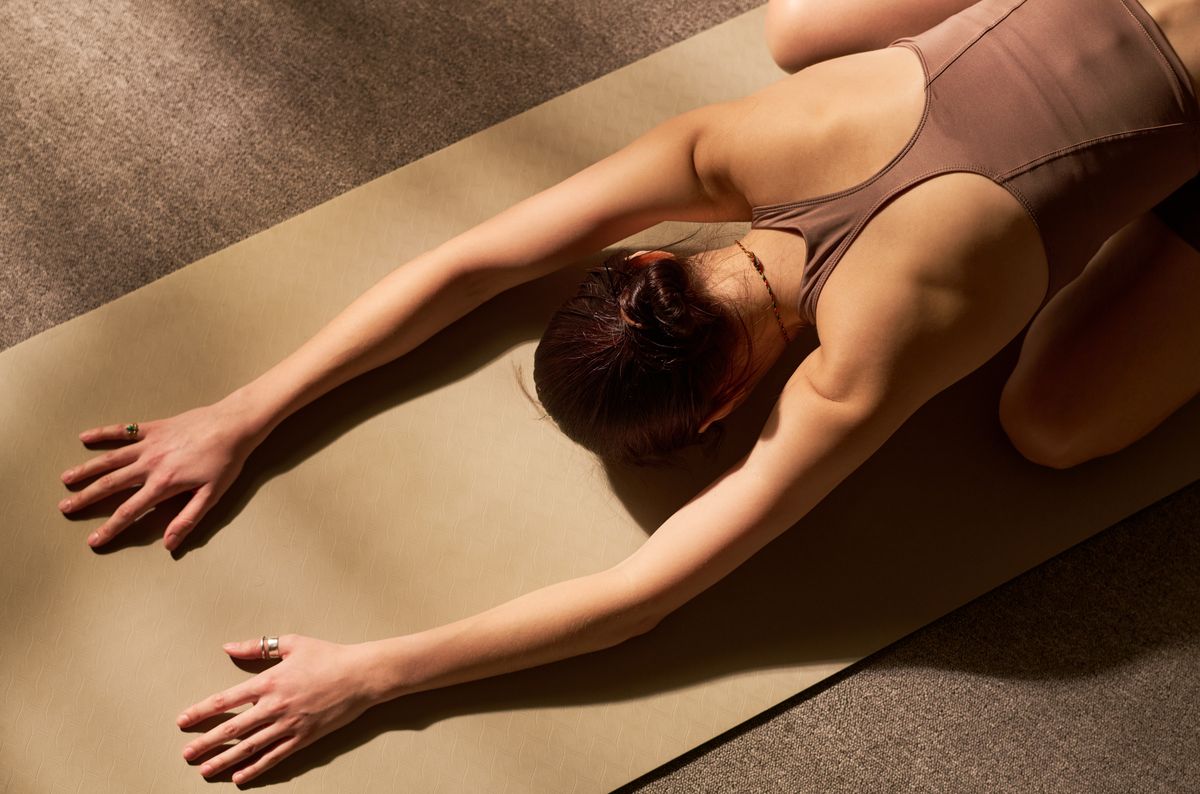
5. Child's Pose. Starting on all fours, sink the hips back toward the heels and extend the arms forward along the floor. Child's pose is a widely recommended pre-sleep stretch because it simultaneously opens the hips, lengthens the spine, and encourages slow, deep breathing—all of which support the body's natural relaxation response.
Building the Habit Over Time
Consistency is what transforms a one-time stretch into a genuine sleep-improving habit. Pairing stretching with other elements of a calming nighttime routine, such as dimming the lights, limiting screen use, or having a warm drink, reinforces the body's association between these activities and the approach of sleep.
The five stretches outlined here work well as a sequence, moving from seated to lying down to floor-based positions, creating a natural, unhurried progression that mirrors the body's gradual shift toward rest. Over time, the routine itself becomes a cue, and the body begins to respond to it with increasing ease.
It's Time To Stretch
Sleep quality affects nearly every dimension of daily wellbeing, from mood and focus to physical recovery. Pre-bedtime stretching is one of the most accessible tools available for improving it—requiring no equipment, no special skill, and very little time. The physical benefits are well-supported: reduced muscle tension, better circulation, and a lower chance of overnight cramping. The mental benefits are equally meaningful, with stretching offering a mindfulness-based way to disconnect from daily stress before sleep. Exploring the full range of stretching techniques, variations, and expert recommendations can help anyone build a more personalized, effective routine that genuinely supports better rest night after night.