

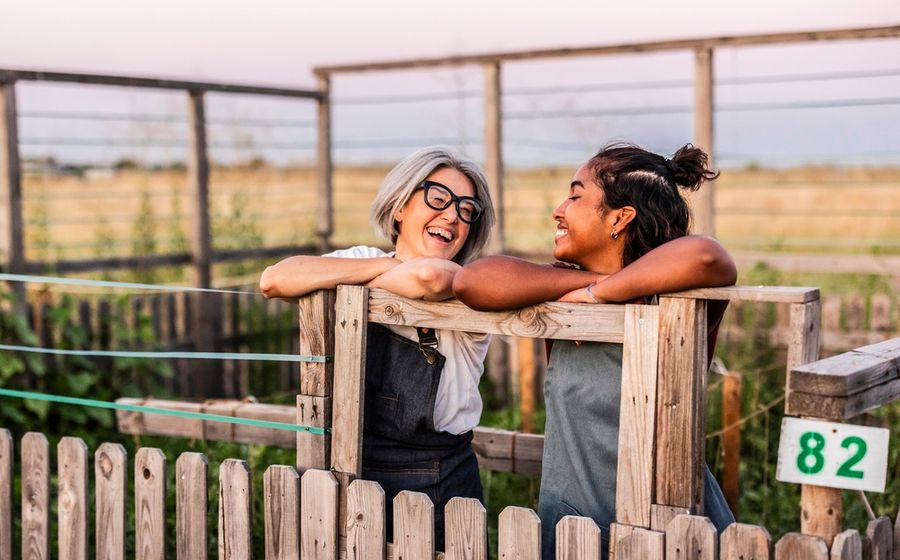
Most friendships form between people of similar age, but some of the most meaningful connections cross generational lines. Age-gap friendships bring fresh perspectives, unexpected support, and a kind of mutual growth that same-age relationships rarely replicate.
Why Age-Gap Friendships Form in the First Place
Cross-generational friendships often develop naturally through shared environments like workplaces, neighborhoods, religious communities, or volunteer organizations. Unlike same-age friendships, which tend to form around similar life stages and shared experiences, these bonds arise from something harder to define: a genuine curiosity about another person's world. When the usual social shortcuts of generational identity fall away, something more intentional takes their place.
Ronald Siegel, an assistant professor of psychology at Harvard Medical School, notes that building these kinds of friendships requires letting go of generational biases and "approaching the other person with curiosity, yielding access to all different types of intelligence, insight, and awareness". That openness, he suggests, is not a side effect of intergenerational friendship but one of its defining features.
What Each Generation Brings to the Table
One of the most compelling aspects of a friendship that spans decades is the natural exchange of knowledge and lived experience. Older friends often bring hard-won perspective, a longer view of life's challenges, and a kind of patience that comes from having weathered difficult seasons. Younger friends, on the other hand, frequently introduce new ideas, cultural shifts, and an energy that keeps older companions more engaged with the present.
This dynamic benefits both parties. Research highlighted by AARP indicates that both older and younger adults gain meaningfully from friendships that span generational divides, with cross-generational bonds offering a unique form of connection that same-age relationships may not replicate. Rather than one party teaching and the other learning, both tend to grow in different directions simultaneously.
The Mental Health Case for Diverse Social Circles
Social science research has consistently linked strong friendships to better mental health outcomes, and intergenerational friendships appear to amplify those benefits. Siegel has observed that people who lack connections outside their own generation tend toward narrower opinions and a more rigid worldview. By contrast, a flexible mindset supported by diverse friendships is described as a cornerstone of psychological health.
Friendships in general have measurable physiological benefits. Strong friendships are associated with lower stress, reduced blood pressure, and a buffering effect against blood pressure spikes during stressful periods. When that friendship also bridges a generational gap, the cognitive and emotional rewards appear to deepen further.
Resilience Through Life Transitions
Major life changes, whether a career shift, a health challenge, a move, or a loss, can fracture same-age social networks if everyone involved is going through similar disruptions at the same time. Cross-generational friendships offer a natural buffer against this kind of social fragility. Adults with intergenerational friendships report access to wider support networks that extend beyond their same-age peer group, providing perspective and resilience precisely when it matters most.
Because older and younger friends are typically at different life stages, the friendship itself is less vulnerable to simultaneous disruption. When one person is navigating a challenge, the other may be in a more stable period, making meaningful support far easier to offer.
Aging Well With Younger Friends
One particularly striking finding involves how intergenerational friendships affect the experience of aging itself. Older adults who maintain friendships with people more than a decade younger than themselves tend to feel younger and express greater satisfaction with their own aging process. This is not a trivial psychological effect. The way a person perceives their own aging has been linked to their overall health trajectory, motivation, and longevity outlook.
Staying socially connected across generations appears to counteract some of the isolation that can accompany later life, particularly as same-age peers face health challenges or loss. A younger friend's enthusiasm, routines, and worldview can keep older adults anchored to the present in ways that purely age-matched social circles may not.
Why Cross-Generational Friendships Are Worth Pursuing
Despite all the evidence pointing to their value, age-gap friendships remain relatively uncommon. Social sorting by age is deeply embedded in how communities are structured, from education systems to retirement communities. Most people simply spend the majority of their time around others who were born in roughly the same decade.
Breaking that pattern does not require dramatic effort. It often begins with genuine curiosity and a willingness to set aside assumptions about what someone from a different generation can offer. Whether the friendship lasts years or a lifetime, research consistently shows that both parties walk away with something they could not have found elsewhere: a richer, more flexible understanding of what it means to move through the world at any age.
Time To Make New Friends
Cross-generational friendships offer a distinctive kind of value that same-age relationships rarely provide. The research is clear: these bonds support mental health, build resilience, widen support networks, and even change how people experience aging. Both older and younger individuals gain perspective, emotional grounding, and cognitive flexibility from friendships that cross generational lines. For anyone looking to enrich their social life and build connections that last through life's inevitable changes, exploring what intergenerational friendship can offer is a meaningful place to start.